Painting medium that can fool people
Why are people observant but wrong if they think that this picture “Frozen in Time” was painted in watercolours and oils?
PICTURE PERFECT: ARTWORKS AND EXHIBITIONS
Angela Birchall
1/29/20265 min read
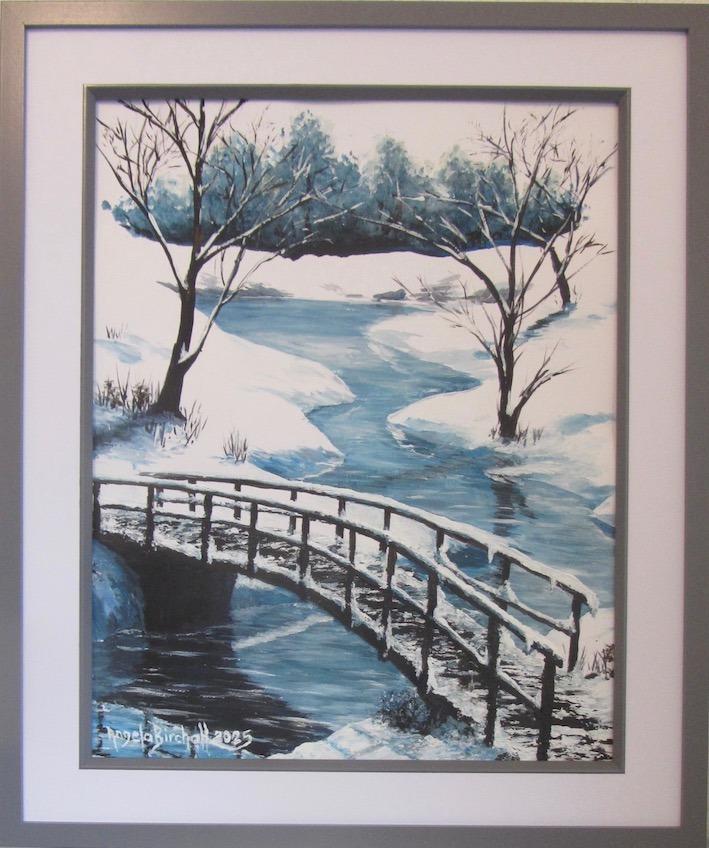
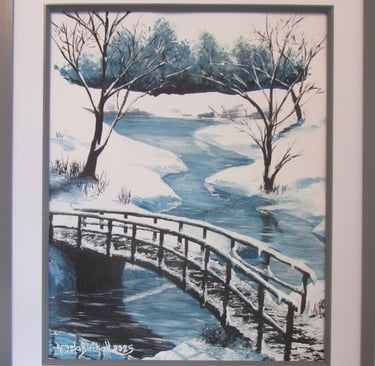
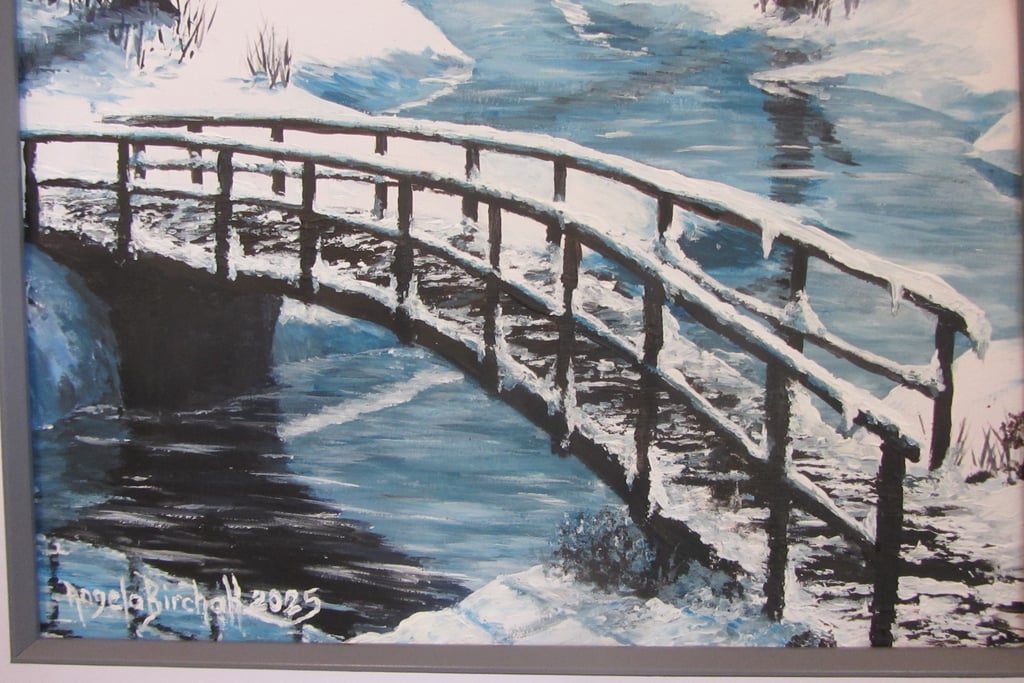
If I ask why they have settled on that answer they will point to the thinner washes of paint in the top half to show me where I have used watercolour. Then they go down to the bottom half and run their fingers over the thick layers of paint making up the struts of the bridge to show me where the oil paint had been applied with a palette knife.
I smile and tell them they are observant but wrong.
When I ask people what in medium – or media – this picture “Frozen in Time” was painted, the majority answer: “Mixed media: watercolours and oils.” Why does that make them observant but wrong?
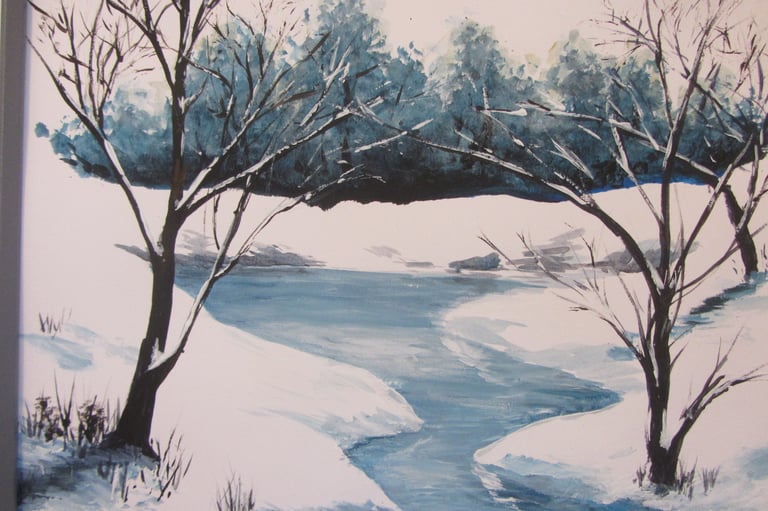
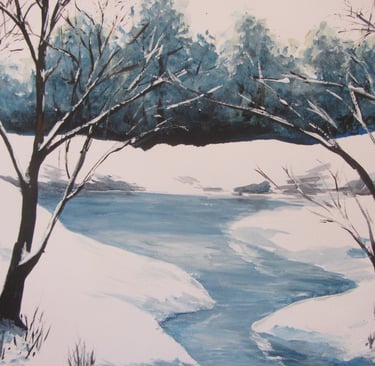
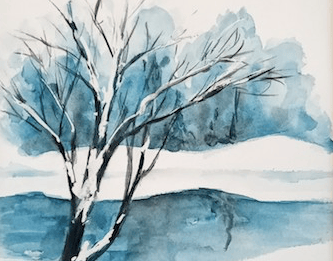
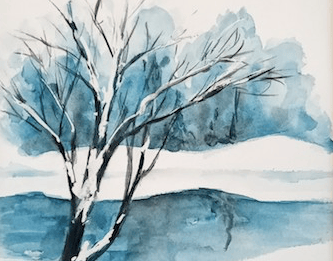
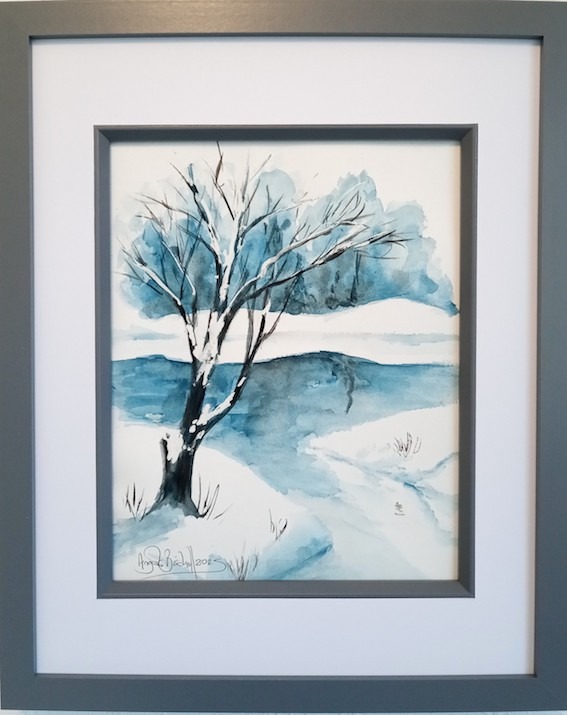
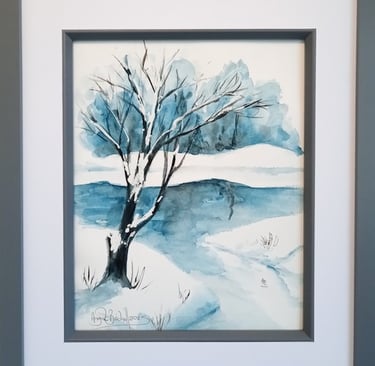
It’s easy to see why they have come to that conclusion. Compare the top section of “Frozen in Time” (left) with the top section of the watercolour painting “Frozen Lake” (right) that I did a few weeks earlier. It looks like the same technique has been used which is the classic watercolour ‘wash’ that absorbs into the paper rather than sitting on top of it as oils would.
The two paintings have very similar subjects and almost identical colour palettes. I had actually painted “Frozen Lake” as a fore-runner to “Frozen in Time” not only to try out the subject and colour palette, but in order to decide which painting medium to use.
I love painting snow, or even drawing it, but whichever painting medium you choose requires a different approach. In a nutshell, when you use watercolours you basically don’t paint the snow other than snow shadows. That involves a lot of forward planning and either painting very carefully to leave the white snow as white paper, or you have to mask out the areas you want to be snowy before you paint and then remove the masking fluid afterwards.
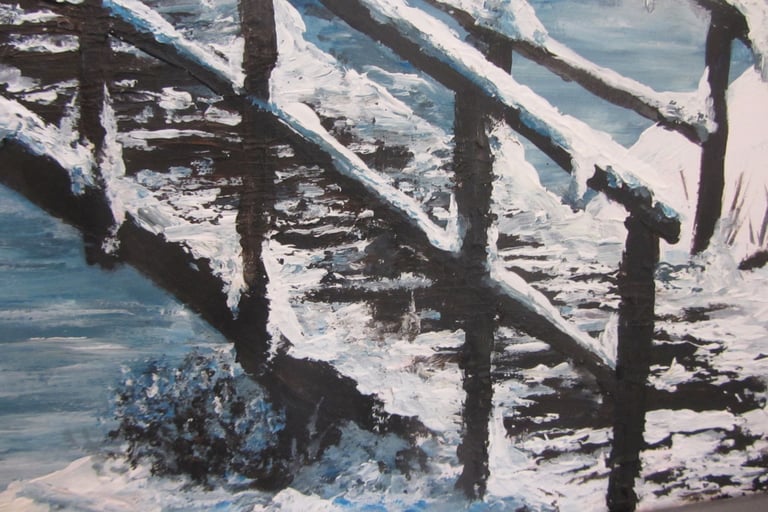
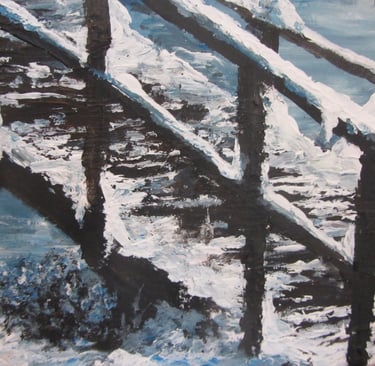
On the other hand, if you do it in acrylics or oils you can get a brush or palette knife and pile heaps of snow (aka thick white paint) onto any object in the painting such as the branches of trees, roofs of buildings, and, in this instance, the posts and rails of the bridge. The bonus is that if you get towards the end of the painting and the snow is looking a little sparse, you can just add heaps more white snow/paint onto any surface whereas with watercolours, the more you paint the less snow is left.
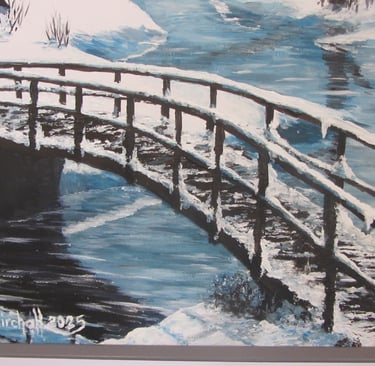
If you look at these close-ups from the bottom section of “Frozen in Time” you can see that the paint is piled up thickly for both the bridge struts and the snow piled up on them so it cannot possibly be done in watercolours. The thickness of the paint is such that if you closed your eyes and ran your fingers over the picture you could trace the structure of the bridge, so the obvious conclusion is that it needs to be the thickest of the standard painting mediums, i.e. oils. That leaves people thinking it’s a mixed media piece in watercolours and oils.
In actual fact, the whole picture is painted in acrylics but deliberately done in a way that mimics both watercolours and oils just to show how versatile this painting medium is.
I am just as happy painting in watercolours, acrylics or oils and because I have used all three for around 5 decades I know the pluses and minuses of each medium. As a result, I use the one which will produce the effects that I am aiming for – including giving the effect of a different medium. I have also mixed watercolours and acrylics in one image before now, but never mixed anything in with oil paints.
Finding the sweet spot of acrylics
If you haven’t used all three painting media I can explain how most people perceive them with an analogy to cake decoration. Watercolours on paper is like the sheets of coloured fondant icing because you can’t separate the colour from the fondant just as watercolours absorb into the paper. Acrylics is like the buttercream icing that you can pile onto the cake and smooth over but it’s sitting just proud of the cake. Oils, on the other hand, is like the piped decoration that creates more of a 3D look to the decoration.
It is easy to understand how people would think that the thin washes at the top of this painting that have absorbed into the paper were done in watercolours as it is one of the classic features of this medium. I used it in the initial painting "Frozen Lake" (below).
A few months ago one of my students was battling with some tubes of acrylic paint that were too thin for what she wanted and she remembered me mentioning in a class about being able get acrylics to thicken up. “How do you do it?” she asked. Easy, I replied, just leave it out in the air to oxydise and it thickens up . . . you just have to use it at that sweet spot which is the point between it being too thin and drying up completely. “How long does that take?” she aded. As long as the proverbial piece of string . . .
But it's well worth the wait. When you hit that sweet spot, you get wonderfully thick paint that you can pile onto a painting with a palette knife and it will look so convincing. I always laugh when people view the finished works and spend ages debating it with me, trying to convince me that I used oils when I tell them that I painted it in acrylics. “Oh no,” they insist, “Look, you can see the raised surface of the oil paints.”
I love painting in oils and watercolours, but acrylics is not only more forgiving than watercolours, and faster drying than oils, it’s also the most versatile of any painting medium, as “Frozen in Time” clearly shows.
"Frozen in Time" is on exhibition - and sale - at the St Helens Open Exhibition at the World of Glass museum and galleries in St Helens until February 28th 2026.
Think of it like cake decorating
However, if you have ever used acrylics, you will probably know that you can thin them down with water and then it behaves more like watercolours and goes into the paper, which is exactly what I did in the "Frozen in Time" example. Thus, it is easier to appreciate that what first looked like watercolours could actually be acrylics mimicking watercolours.
But what about the thickly applied paint at the bottom of this painting? As I said, you can run your fingers over sections like the struts of the bridge and feel the raised surfaces that is a classic feature of oils over any other medium. Yes, you can thin oils down as well but we are looking instead for a way to thicken another medium up to mimic oils.
Get in touch
Use the message box to drop me a line if you want to:
purchase my paintings or drawings;
discuss commissioning me to create a unique work of art especially for you;
have a question to be answered in a future Picture Perfect blog post;
join one of my face-to-face painting or drawing classes in West Lancashire or have private coaching online;
discuss a bespoke staff development event using art to encourage teamwork and leadership
Contacts
0044 77242 00779
youcandrawandpaint@gmail.com